Visual Field Test

What if you could monitor your peripheral vision for subtle changes, long before they become obvious?

Good with caveatsVisual Field Test provides a robust, AI-enhanced platform for at-home visual field screening and tracking, offering valuable insights for proactive eye health management, but it is not a diagnostic medical device.

Visual Field Test offers an online platform for users to conduct visual field tests from home, providing AI-assisted analysis to track changes in peripheral vision over time. It aims to help users catch early signs of vision changes, offering both simple and advanced test modes for varying levels of detail.
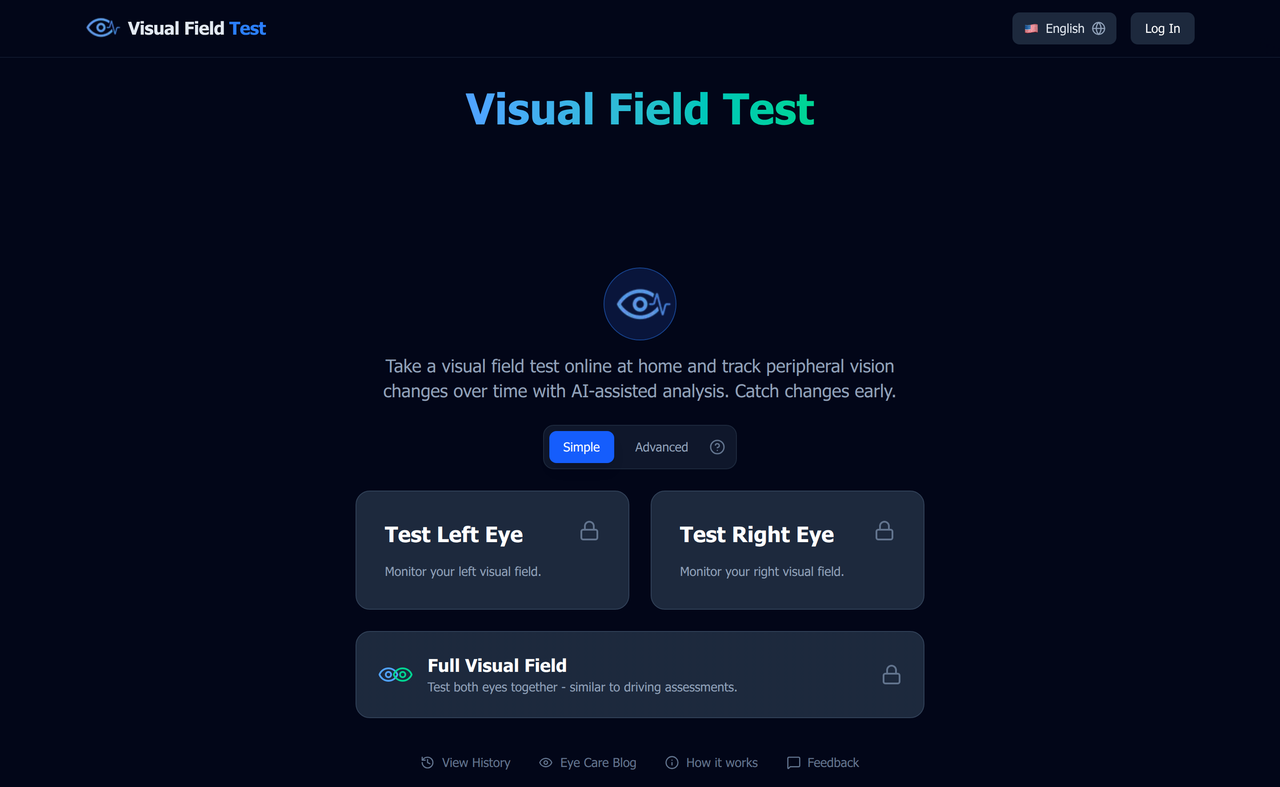
Key Features:
  • Simple & Advanced Test Modes (quick check vs. threshold testing)
  • AI-assisted analysis with plain-language summaries
  • Side-by-side test comparison and vision trend tracking
  • Doctor-ready PDF reports with clinical metrics
  • Secure sharing of results with doctors or family
Pros
  • Individuals concerned about gradual peripheral vision loss due to conditions like glaucoma.
  • People who want to proactively monitor their eye health between doctor visits.
  • Users seeking detailed, trackable visual field data with AI interpretation.
Cons
  • Not a medical device; results are for educational/informational purposes only and not for diagnosis.
  • Accuracy can be affected by home environment factors like screen brightness, lighting, and user technique.
  • Requires screen calibration for Advanced mode to ensure accurate threshold measurements.
Pricing
freemiumFree tier
Starting at:unknown
Free tier:Limited functionality, likely basic tests without full tracking or advanced features (implied by subscription for tracking).
Trial:unknown
Refund:All sales are final; no refunds for subscription payments, but technical issues reviewed case-by-case within 7 days.
Share:
Quick Decision
Try if: You are looking for an accessible, AI-assisted tool to regularly monitor your peripheral vision at home, especially if you have risk factors for eye conditions like glaucoma, and want detailed reports to share with your doctor.
Skip if: You expect a medical diagnosis from an online tool, or you are unwilling to perform screen calibration and maintain consistent testing conditions for accurate results.
Not for: Anyone seeking a medical diagnosis or replacement for professional eye care.; Users who cannot consistently maintain proper screen calibration and viewing distance for advanced testing.
Trust Signals
  • Founded


    2024
  • Team Size


    small
Compliance
GDPR
Tech Details
Platforms
web
Integrations
Google FirebaseStripeOpenAIMicrosoft ClarityTolt (Affiliate Platform)Meta/Facebook (Pixel)Google Ads & Analytics
  • AI Model


    OpenAI
Open Source
No
Support
Channels
email
  • Response Time


    unknown
Company
  • Name


    MB Skydis
  • Location


    Lithuania (implied by GDPR contact)

Operator of the Visual Field Test website and application, committed to providing an online visual field screening simulation for educational and informational purposes.

FAQ

How accurate is an online visual field test?

The online visual field test is designed as a screening and monitoring tool, not a replacement for professional diagnosis. While the advanced mode uses threshold-based testing to map peripheral vision, it does not replace a comprehensive eye exam. It helps users stay informed and provides data to share with their eye doctor.

How often should I take a visual field test?

For monitoring purposes, taking a visual field test every 1–3 months is recommended to track changes over time. Individuals at higher risk for glaucoma (family history, over 40, high eye pressure) may benefit from more frequent testing, always following their eye doctor's recommendations.

What can a visual field test help detect?

A visual field test can reveal patterns associated with conditions like glaucoma, macular degeneration, and other eye or neurological concerns. It helps users notice changes early, but proper evaluation and diagnosis should always come from an eye care professional.

Is Visual Field Test a medical device?

No, Visual Field Test is explicitly stated as NOT a medical device, diagnostic tool, or substitute for professional medical care. It is provided for educational and informational purposes only and has not been evaluated or approved by any regulatory agency.

What data is collected and how is it used?

The service collects account information (email, name, password), payment information (via Stripe), test results, and communications. Automatically collected data includes device info, usage data, and IP address. This data is used for service provision, communication, improvement, analytics, security, and legal compliance. Test data sent to OpenAI for analysis is anonymized.

Use Cases
  • Individuals concerned about gradual peripheral vision loss due to conditions like glaucoma.
  • People who want to proactively monitor their eye health between doctor visits.
  • Users seeking detailed, trackable visual field data with AI interpretation.
AILookup

Research utility for AI tools. Compare reviewed profiles, distinguish listed tools from reviewed coverage, and track tool changes without marketing fluff.

© 2026 AILookup. All rights reserved.